Posted on — Leave a comment

Why quality audio is so important in your promotional video…

It’s easy to imagine that the visuals are the most important part of your promotional film, but when it comes to making the right impression, audio is equally as important if not more so. When shooting a video, a lot of time is spent thinking about and planning things like focus, angles, lighting and such, but sometimes less time is focused on making sure the audio is captured and produced properly.

Rode Blimp II Deadcat Wind Muffler

It’s worth remembering that we tend to be more forgiving of poor quality video than we are of poor quality sound. We’ll happily watch something ‘interesting’ whether it’s in SD or 4K, there might indeed be an artistic or abstract element to a grainy low-resolution picture, whereas sound recording issues such as distortion, excessive background noise, poor voiceovers, hard to comprehend dialogue and wind rumble are distracting and irritating to our sensitive ears. In fact, a less than perfect film sequence can be saved by an excellent soundtrack, conversely, a superbly shot picture can be ruined by poor quality sound. Don’t expect a round of applause for professional quality audio, but do expect a wholly negative response if the sound quality is distracting for the wrong reasons.

When it comes to adding a voiceover to your film, using a suitable professional to do the job gives you the opportunity to add a shiny layer of polish to your film.

As good as digital audio restoration tools are these days, and they are very good, nothing can beat getting the audio recorded properly in the first instance. If you think you can just stick a portable audio recorder near the camera, press record and somehow fix the audio later in post, think again. There are almost always artefacts. A bit of tweaking is possible and definite improvements can be made, but it’s much better to get the audio recorded properly in the first place. Get dialogue recorded up close and personal to make sure it’s crisp and clearly intelligible. There’s nothing more annoying than muffled hard to comprehend speech in a film. Use decent fit for purpose microphones and furry windshields to avoid wind rumble, and monitor the audio carefully on headphones.

Voiceover booth at Sounds Visual with industry standard voice recording microphone, the Neumann U87

When it comes to adding a voiceover to your film, using a suitable professional to do the job gives you the opportunity to add a shiny layer of polish to your film. If you are producing your own films it can be tempting to voice them yourself – after all, how difficult can it be to record yourself reading aloud? Well as it turns out, it’s quite an art and definitely worth investing in a professional. However, make sure your script is well written, edited and finessed so that it reads fluently and easily.

At Sounds Visual we specialise in post-production mixing, sound design and voiceovers. To discuss a project why not give us a call for a friendly chat on 07738 470011 or email jono@soundsvisual.com

Posted on

Alternatives to ISDN for voiceover recording

The days of using ISDN to connect studios and artists together may be numbered, but it’s still used by studios, radio stations and voice artists around the world. However, there are now many excellent alternatives that use IP connections rather than ISDN.

isdn for voiceovers
BT ISDN Connection

The alternatives to ISDN for connecting to remote studios

Source-Connect
Not to be confused with Source-Connect Now, (see below) Source-Connect by Source-Elements has been around for a long time and is well established as a high quality, full-featured app for connecting studios and artists. The deep feature set includes extensive facilities for working with audio and video including RTS (Real Time Sync)

Source-Connect Now
This is a free popular option that works in the Chrome browser using the high-quality codec ‘Opus’. The free version allows 4 studios to connect in stereo at up to 512kbps (kilobits per second) (256kbps mono)

ipDTL
ipDTL is billed as an ideal replacement for ISDN. We use it at Sounds Visual for live broadcasts with the BBC World Service and it has proved to be super reliable and easy to use. Notably, when broadcasting live, we now run ipDTL as the main connection to the BBC and have a separate ISDN line using Audio TX as the backup. That’s simply because ipDTL has proved to be rock solid, whereas ISDN can be temperamental – usually when using different codecs at each end.

As with ‘Source Connect Now’, ipDTL can run in the Chrome browser, but ipDTL also runs in the Opera and Yandex browsers, and now has its own dedicated ‘ipDTL Browser’. There is an excellent feature set depending on the subscription type you take out. Options include the ability to receive and call ISDN numbers, justifying their claim to be an ideal replacement for ISDN.
If you only occasionally need ISDN or a phone patch for recording phone interviews, the ipDTL Day Pass, which gives you access to all ipDTL features including receiving and calling ISDN numbers, is an affordable option at just £10 + vat per day.

Session Link Pro
High quality bi-directional audio connection with low latency through a web browser. Session Link Pro also offers an add-on for video sync and another add for high-quality video and audio conferencing.

Cleanfeed
Cleanfeed also utilises the Opus audio codec to enable remote studios to connect high-quality audio in real time. There is a free version and Pro version available.

AudioTX Communicator
AudioTX has been around for quite a while and provides a software solution for using your PC as an ISDN codec, however, it also features an excellent IP codec.

Skype
The appeal of Skype is that it’s free, easy to use and pretty much everyone has it. The quality isn’t good enough for broadcast but for situations where the voice is recording the audio their end, and just need a connection to be directed, or so the client can clear the read, then Skype is invaluable.

At Sounds Visual we use ISDN, ipDTL, Source Connect, Source Connect Now and Skype for remote voiceover sessions.

ISDN studio available for hire as used by the BBC in Bath for voiceover recording and ADR. Call 07738 470011 or email jono@soundsvisual.com

Posted on — Leave a comment

10 tips for better on-hold telephone hold audio

Top 10 tips for keeping your customers happy on-hold

No-one likes being kept on-hold but it’s fair to say that these days, to a certain extent, we mostly put up with it, as long as it’s done well. By that I mean we’re not left waiting in silence with no idea if anyone is coming back to us, or bombarded with aggressive loud music, or irritated by an annoying voice trying to flog us something else while we wait…

So here are 10 top tips for keeping your customers reasonably content when they are on-hold…

Use a professional voiceover.

Choose music or a soundscape that represents your brand rather than something you like.

Think about your customers. Apart from reassuring them that you won’t be long… what information would actually be helpful for them to hear.

Keep the voiced messages short and concise.

Avoid the phrases that drive you mad when you’re on hold. Surveys have suggested that phrases along the lines of ‘your call is really important to us’ irritate customers.

Making  your messages personal creates a connection between the company and caller. For example you could mention a staff member by their first name and their department.

If you’re unsure of your writing abilities it’s worth paying a professional to script up your prompts / messages. Your on-hold production company will be able to help.

Don’t be afraid of humour. If it’s  appropriate for your brand, a little light-heartedness could keep your callers amused and in a more receptive mood.

Plan to change your on-hold messages when necessary to keep them up to date with your business.

See No 1

Jonathan has been producing telephone hold audio for UK businesses for over 20 years. To discuss an on-hold package for your business call 07738 470011 or contact Sounds Visual here.

Posted on — Leave a comment

Flex Pitch and Flex Timing at Same Time in Logic X

If you have a vocal recording that you wish to adjust the tuning of with flex pitch, can you also make some timing adjustments with one of the flex time algorithms and have them act on the audio file at the same time?

The answer is yes.

Flex Pitch in action in the tracks area

Now change the flex mode to flex time and you’ll get this warning…

So whilst you edit the timing of your vocal, your flex pitch adjustments will be suspended and then reinstated once you return to Flex Pitch Mode. So to have both processes take affect at the same time you have to be in Flex Pitch mode.

Flex pitch and flex time together
Flex Pitch and Flex Time working together on an audio file


Posted on — Leave a comment

SoundDevices MixPre-3 and Audio-Technica BP4025

Stereo Location Sound

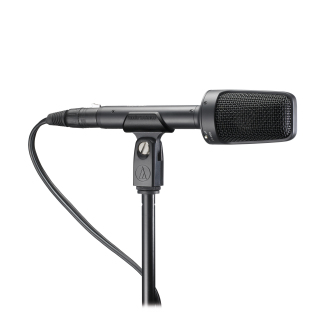
Audio-Technica BP4025 Stereo Mic

I’ve been recording sound effects and soundscapes for 25 years, and over this time have used a variety of kit. Previous stereo kit has included a Sennheiser MKH 30/40(60) M-S array and HHB Portadat as well as my ‘trusty until it broke’ Sony D50 and I often use my back pocket kit which is a Tascam DR-05 with a pair of low noise Primo EM172s.

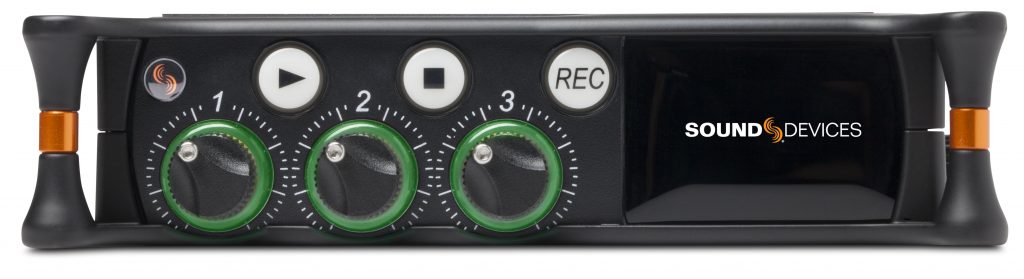
My current go to combo for going out into the field to record soundscapes comprises a Sound Devices MixPre-3, Audio-Technica BP4025 X/Y Stereo Microphone and the dependable Rode Blimp II. The Sound Devices MixPre-3 features in a separate blog post so I will concentrate on the BP4025 here.

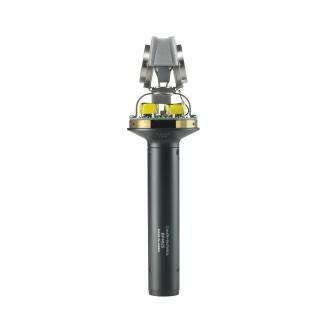
The BP (Broadcast & Production) 4025 is a singe point large diaphragm stereo mic with an innovative coincident capsule configuration. AT BP4025 stereo microphone capsules
Despite the angle of the capsules there is surprisingly no apparent energy drop in the centre front of the mic, and it produces an accurate wide stereo image with a really smooth detailed sound full of depth. For nature soundscapes, the low self noise of the BP4025 combined with the super quiet Kashmir preamps on the Sound Devices MixPre-3 can yield some excellent results. The compact size of the lightweight BP4025 also means it fits very neatly in the effective yet affordable Rode Blimp II, as well as being suitable for camera mounting.

Listen to some example nature recordings using the BP4025 in the video below

Large-diaphragm capsules offer pristine sound quality and exceptionally low noise
Phantom power operation—for use with professional equipment
Switchable low-frequency roll-off and 10 dB pad

Posted on — Leave a comment

Update for the Sound Devices MixPre-3

Location recorder
MixPre-3 Recorder from Sound Devices

The excellent MixPre-3 portable recorder from Sound Devices has a new firmware update to v1.51 with lots of fixes and improvements.

Changes

  • Date/Time settings moved to System Menu plus simplified method of entry.
  • New Project folders are now only created when the first file is recorded, preventing the SD card filling up with empty folders.
  • USB keyboard shortcut [Shift + 8] performs the * Button function. (MixPre-6 only)
    On the MixPre-10T, the Shift + 8 shortcut performs the * (left toggle) Switch function, and Ctrl + Shift + 8 performs the ** (right toggle) Switch function.

Fixed

  • Activating Record is now prevented while in USB File Transfer Mode. (MixPre-10T only)
  • Improved battery type detection.
  • MixPre-3 Input Delay values now hold over power cycles.
  • Files can now be selected for playback from the File List while the MixPre is still playing back a file.
  • Cleaned up typos and incorrect messages in various popup dialog boxes.
  • Corrected three sample offset between isolated and mix track recorded files.
  • Virtual keyboard screens were not saving and exiting on the first press of the enter key.
  • Channel knob and gain range values could be wrong after changing a channel source to Aux In or switching Aux In Mode between Mic and Line.
  • Time is now updated on the Status Bar if left as the active display.
  • Rare system lock up that could occur after hours of using Camera timecode.
  • External UBits are now stamping correctly as hex values.
  • With Channel 1 set to USB1, lInking 1-4 would assign channels 1-4 as USB1, USB1, USB2, USB3 instead of USB1, USB2, USB3, USB4.
  • Multiple other system enhancements and improvements.
  • Invalid Path error messages would pop up intermittently when creating a new Project folder.
  • Audible noise on L and R Out when adjusting Stereo Out level from -21 to -40 dB.
  • Input type was incorrectly getting set to the incorrect USB Channels when Channels 1-4 are linked. (MixPre-6 only)

If you reed any custom location recording please contact Jonathan on 07738 470011 or email jono@soundsvisual.com

Posted on — Leave a comment

Using Source-Connect with Logic Pro

Source-Connect is an application produced by Source-Elements to enable two studios to remotely connect over the internet, and send and receive high quality audio. It’s the replacement for ISDN lines and codecs,  and due to its excellent picture sync features, like RTS – Real Time Sync – it’s the go to app for the tv & film post production industry.

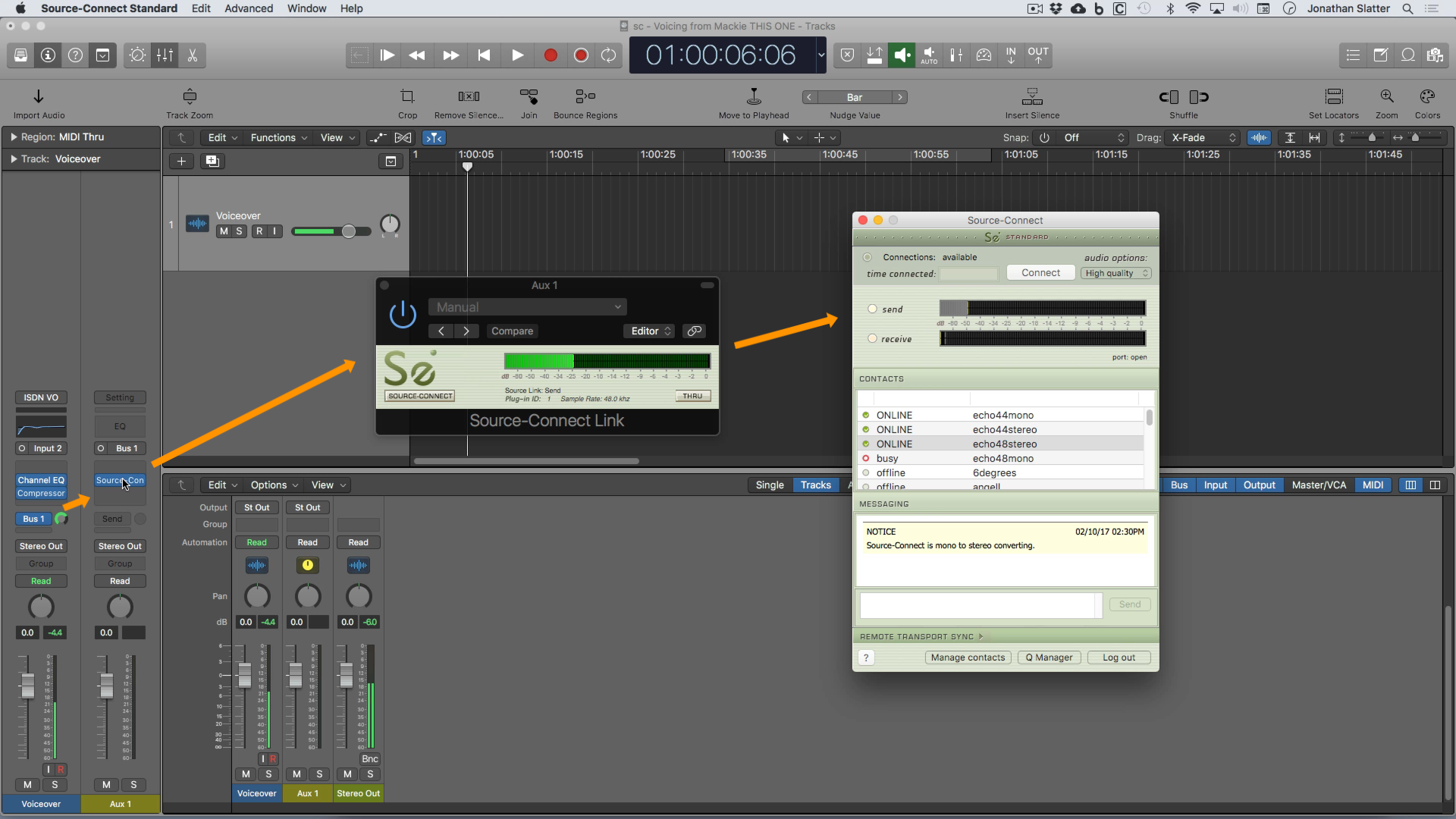
Using Source-Connect as a standalone product is a breeze, but what what about if you want to use the app with Logic Pro, or for that matter any other DAW? Well that’s easy too, with a plugin called Source-Connect Link, that is automatically installed when you install the software.

source-connect link
The Source-Connect Link plugin running in Logic Pro X

To connect your Logic Pro DAW to Source Connect is just a case of using an instance of Source-Connect Link and using a few busses and auxiliaries. Below are videos produced for Source Elements showing how to do it – including one how to use RTS (Real Time Sync) in Logic Pro. And at the bottom of the page there are 2 templates for Logic – one in stereo and the other in mono.

Source-Connect Logic Pro

Source-Connect Logic Mono Template

Source-Connect Logic Stereo Template